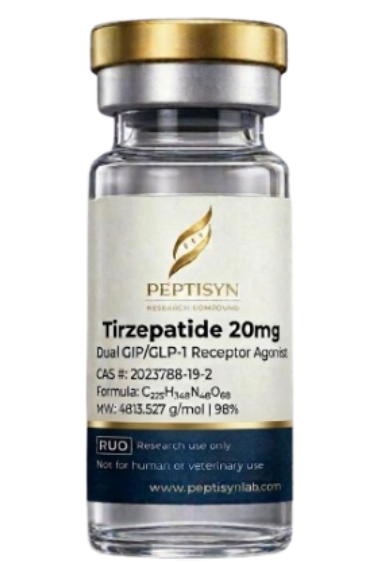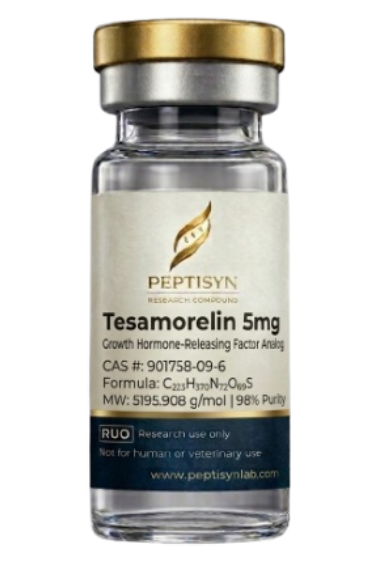
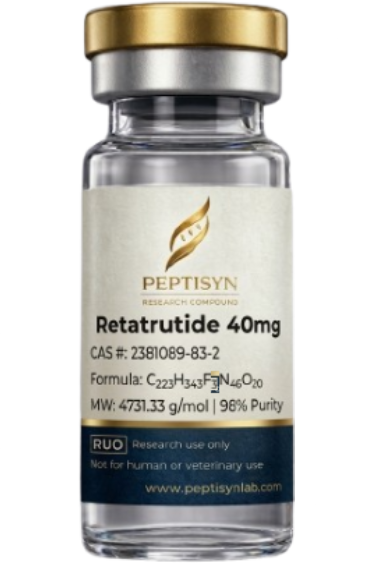
Retatrutide 40mg
Synthetic peptide acting as a triple agonist at the GLP-1, GIP and glucagon receptors. Investigated as one of the most pharmacologically potent incretin-class molecules in research.
- CAS Number
- 2381089-83-2
- Molecular Formula
- C223H343F3N46O20
- Molecular Weight
- 4731.33 g/mol
- Purity
- ≥ 99% HPLC
- Vial Content
- 40 mg lyophilized
- Form
- White lyophilized powder
Overview
Retatrutide (LY-3437943) is a single-molecule synthetic peptide engineered to simultaneously engage three metabolic receptors: GLP-1, GIP and glucagon. It is the first tri-agonist of its class to advance through clinical research stages, making it a frequent reference in studies on energy expenditure, body composition and glycemic control.
The molecule is structurally derived from the GIP backbone with strategic modifications that confer balanced agonism across all three receptors. The added fatty acid moiety binds serum albumin, dramatically extending circulatory half-life and enabling once-weekly dosing schedules in research protocols.
Mechanism of Action — How It Works
Retatrutide acts as an agonist at three independent G-protein-coupled receptors. Each contributes a distinct effect; together they produce an additive metabolic profile not achievable with single- or dual-agonist molecules.
GLP-1 Receptor
Stimulates glucose-dependent insulin secretion, slows gastric emptying and reduces appetite at the central nervous system level — the same axis as semaglutide.
GIP Receptor
Enhances insulin response to nutrients, modulates lipid handling in adipocytes and may improve subcutaneous fat depot function.
Glucagon Receptor
Increases hepatic energy expenditure and basal metabolic rate, the additive component differentiating retatrutide from dual agonists.
Albumin Binding
The fatty di-acid side chain binds plasma albumin, shielding the peptide from renal clearance and proteolytic degradation — extending half-life beyond 6 days.
Research Effects on the Body
Across published research, retatrutide produces a consistent profile of metabolic responses summarized below. All effects are described at the level of investigational data — not as therapeutic claims.
- Body weight reduction: the largest mean reductions reported among incretin-class research peptides at comparable durations.
- Glycemic control: improvements in fasting glucose and HbA1c-equivalent endpoints in metabolic models.
- Visceral and hepatic fat: reductions in both compartments, attributed to the glucagon-receptor component.
- Energy expenditure: measurable increase in resting metabolic activity in animal and clinical research.
- Appetite suppression: central GLP-1-mediated reduction in food intake and meal frequency.
- Peptisynlab profile: improvements in triglycerides and apolipoprotein markers in research populations.
Reconstitution — Dilution Math
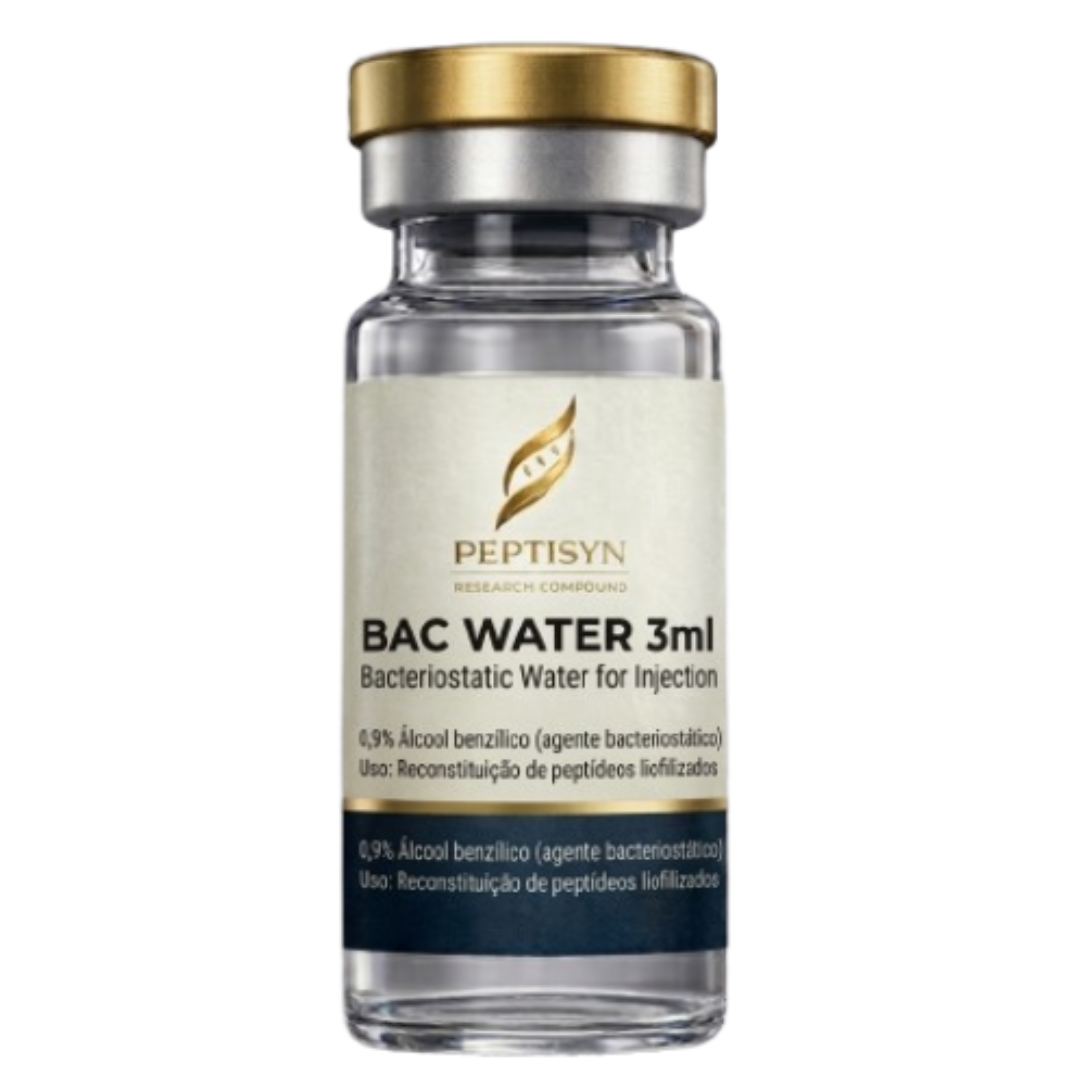
Retatrutide is supplied as a lyophilized powder. It is reconstituted with bacteriostatic water (0.9% benzyl alcohol). The table below shows the most common 40 mg-vial protocols and converts volumes to insulin-syringe units (1 mL = 100 IU).
| Bac Water | Concentration | 1 mg dose | 5 mg dose | 10 mg dose |
|---|---|---|---|---|
| 2 mL | 20 mg/mL | 0.05 mL · 5 IU | 0.25 mL · 25 IU | 0.5 mL · 50 IU |
| 4 mL | 10 mg/mL | 0.10 mL · 10 IU | 0.50 mL · 50 IU | 1.00 mL · 100 IU |
| 5 mL | 8 mg/mL | 0.125 mL · 12.5 IU | 0.625 mL · 62.5 IU | 1.25 mL · 125 IU |
Dosing Reference (Research Context)
Dose ranges below are derived from published clinical-research literature and are listed for laboratory reference only. Peptisynlab does not advise on use in humans.
| Phase | Reported Range | Typical Frequency | Vial Duration (40 mg) |
|---|---|---|---|
| Initial / titration | 0.5 – 2 mg | Once weekly | 20 – 80 weeks |
| Mid-range | 4 – 8 mg | Once weekly | 5 – 10 weeks |
| High-end research | 8 – 12 mg | Once weekly | ~3 – 5 weeks |
Half-Life, Onset and Duration
Half-life: approximately 6 days in published pharmacokinetic studies.
Onset: measurable receptor engagement within hours; appetite and glycemic responses observable within the first week.
Duration of effect: sustained throughout the weekly dosing window. Steady-state plasma levels are typically reached after 4–5 weeks of consistent dosing.
Wash-out: due to its long half-life, full clearance after discontinuation requires roughly 4–5 weeks (5 × half-life).
Storage & Stability
- Lyophilized vial: store at −20 °C for long-term stability (24+ months). Short-term refrigeration (2–8 °C) is acceptable.
- Reconstituted solution: store at 2–8 °C; use within 28 days. Do not freeze after reconstitution.
- Light: protect from direct light.
- Handling: avoid vigorous shaking; gently swirl to dissolve.